Preeclampsia is a pregnancy complication in which blood pressure rises after 20 weeks and the body starts showing signs of strain, such as protein in the urine or changes in liver, kidney, or blood test results. It begins in the placenta, which is why it matters for your baby. In 2026, care is built around two goals: keeping you safe and giving your baby as much healthy time in-utero as possible.
Why does preeclampsia cause early delivery?
The placenta is the reason. In preeclampsia, the blood vessels feeding the placenta don’t develop as fully as they should, so less blood and oxygen reach your baby. Over weeks, that can slow growth, lower amniotic fluid, and raise the risk of the placenta separating early.
Delivery cures preeclampsia for the mother, but it also ends the pregnancy. Babies born before 37 weeks may need breathing or feeding support in a neonatal unit, and the earlier the birth, the more support they tend to need. That tradeoff is why timing is the central decision in preeclampsia care.
Who is most at risk for preeclampsia?
The strongest risk factors are a history of preeclampsia in a prior pregnancy, chronic high blood pressure, diabetes before pregnancy, kidney disease, and autoimmune conditions such as lupus or antiphospholipid syndrome. Carrying twins or more also raises risk.
Moderate risk factors include a first pregnancy, age 35 or older, obesity, a mother or sister who had preeclampsia, IVF, and more than 10 years passing since your last baby. Several moderate factors together can count as much as one strong one.
Can low-dose aspirin prevent preeclampsia?
For women at higher risk, yes, it lowers the chance meaningfully, though it does not remove it. Low-dose aspirin, usually 81 milligrams a day, is started between 12 and 16 weeks and continued until delivery. It works best when begun before 16 weeks, so raise the topic at your first prenatal visits. This reflects current understanding. Never start aspirin in pregnancy without your provider’s okay.
High blood pressure pregnancy treatment: what happens at your visits
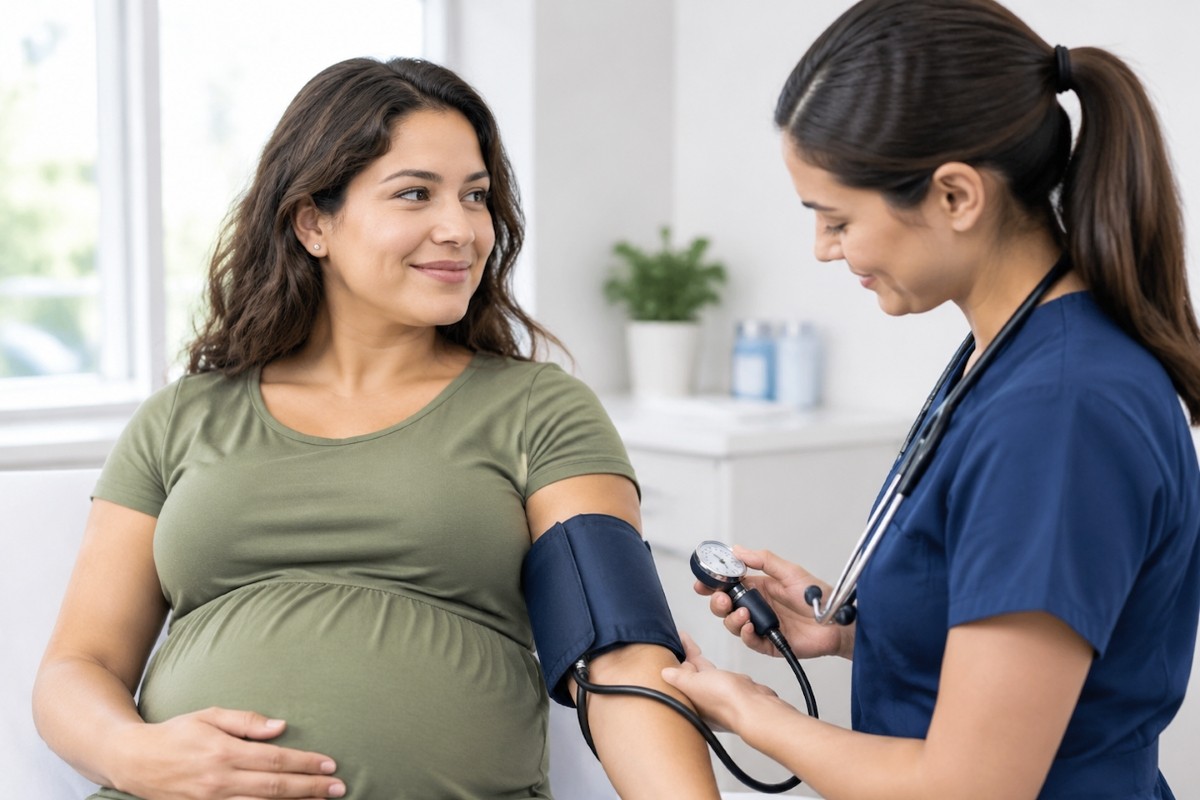
Monitoring is the treatment for most of pregnancy. Once preeclampsia is diagnosed, visits usually move to once or twice a week, often with home blood pressure checks between them. Each visit looks at three things: your blood pressure, your labs, and your baby.
Readings at or above 160 over 110 are treated as severe and need prompt care, often in the hospital. Labs check platelets, liver enzymes, kidney function, and urine protein, since changes there can appear before you feel anything. Your baby is followed with growth ultrasounds every few weeks, amniotic fluid checks, and nonstress tests that monitor heart rate and movement.
How to lower blood pressure in pregnancy when you have preeclampsia
Medication is the main tool, and it protects you more than it changes the disease itself. Blood pressure medicines considered safe in pregnancy, such as labetalol and nifedipine, keep your numbers out of the severe range and lower your stroke risk. Rest, lower salt, and hydration will not reverse preeclampsia, and strict bed rest is no longer recommended.
If preeclampsia becomes severe, IV magnesium sulfate prevents seizures. If delivery looks likely before 34 weeks, steroid injections help your baby’s lungs mature.
When will my baby be delivered if I have preeclampsia?
It depends on severity. The general framework, which reflects current understanding:
- Preeclampsia without severe features: delivery is planned at 37 weeks.
- Preeclampsia with severe features: delivery is usually planned at 34 weeks, once steroids have had time to work.
- Worsening labs, uncontrolled pressure, or signs your baby is struggling: delivery can happen at any point.
A vaginal birth is often still possible. Preeclampsia itself is not a reason for a cesarean, though one may be needed if induction does not progress or your baby shows signs of stress.
Preeclampsia after delivery: what to watch for
Preeclampsia can begin or worsen after birth, most often in the first week but up to about 6 weeks postpartum. Severe headache, vision changes, pain under your ribs on the right side, shortness of breath, or fast-developing swelling are reasons to call your provider or go to the emergency room.
Expect a blood pressure check within the first week or so after birth as part of your postpartum care, sooner if it was severe, and keep taking any medicine you were sent home with until told to stop. Preeclampsia also raises your lifetime risk of heart disease, so share it with every doctor you see going forward.
If you have been told your blood pressure is rising, or you have risk factors and want to talk about taking aspirin early in pregnancy, schedule an appointment with our obstetric team at Legacy For Women in Henderson by requesting one online or calling (725) 777-0414.